Robyn Cook

What remains opaque is how study learns to imitate itself. Under neoliberal conditions, the radical vocabulary of creative inquiry — risk, experimentation, openness — is absorbed into metrics of institutional value.

Critique becomes something measurable, rewardable, optimised, and available for return. Like the hot dog, registered here through staff accrual points, it offers a recognisable form assembled from processed remnants: shaped, coloured, stabilised, and made saleable. It resembles the thing it claims to be, while replacing substance with simulacrum.

Brown’s account of neoliberalism as the economisation of social and political life is useful here because it shows how education is recoded through the logic of human capital. Study is no longer approached primarily as a space of public, critical, or intellectual formation, but as an investment in future value. In this context, the language of criticality, experimentation, and radical practice can remain fully visible while being emptied of political force.

THEORY/PRACTICE DASHBOARD v12.1


Reference: Brown, W. (2015) ‘Educating Human Capital’, in Undoing the Demos: Neoliberalism’s Stealth Revolution. New York: Zone Books, pp. 175–200.

Catarina Fontoura

What remains opaque in how I study the world is where ‘thinking-feeling’ begins and ends.

I am drawn to forms of intelligence that emerge without intention, authorship, or central control. A trail of ants forming across a pavement, pollinators moving through a landscape, a spider’s web trembling with vibration, or a slime mold collective tracing its way through a forest floor. These emergent phenomena challenge assumptions about knowledge as something gathered, possessed and mastered by an individual. They suggest that understanding may arise through relations, movements and encounters between bodies and environments.

My practice research often begins with observation, but observation quickly encounters its limits. Much remains beyond perception. Communication occurs through signals I cannot sense. Decisions emerge from interactions too numerous to follow. What I call intelligence may simply be the shape of my own curiosity meeting something irreducibly ‘other’.

Slime mold leaves behind trails that function as a form of externalised memory, guiding future movement through spaces already explored. It may even anticipate environmental change. A spider’s web is more than a structure; it is a sensory and cognitive extension of the spider itself. Memory, perception, and action are distributed across strands of silk and vibrations in motion. In both cases, cognition/ consciousness appears to exceed the organism, unfolding through material relations within a living-fabric world.

The opacity is not only in these more-than-human lives but in the act of research itself. Every method brings to the forefront certain relations, while obscuring others. Every attempt to make the world legible produces new blind spots.

Rather than seeking complete understanding, I find value in remaining with these uncertainties. Study becomes a practice of sustained – even sacred – attention to what exceeds explanation. A way of learning from forms of intelligence that cannot be fully translated into human terms.

Andrea I Miranda

What remains opaque in how you study the world?

Says the shadow: the person under the duvet under their tangle of yarn; her name lives in the folds made by her incessant circling on the surface imprinting her wanders like the coastal stones that make you forget how to walk, in slanted / in buckled/ in dancing forms your name

                                                                                        drops 

and because I move in flux with you I also drop your name, luckily the covers remember and fumble uuhndruhhuhhh back in dreams disguising it differently every time: an orca, the Yaxche, a stone tiger, crushed stones, slanted landscapes, a small bird.

I witness her thoughts wound round and around the room—endlessly, tirelessly, picking, cutting, reknotting, and squinting so intensely she traps herself inside her eyes.

A pulse emerges

And the letters on the pages and the words from all the voices she thought she knew turned into this heavy choir of uhhh’s. This closed-eyed sensing had her whole body flushed in swirls.

A pulsing releases

through breath and hums interweaving with the squacks of the seagulls and the chirps of robins reciting alongside the drumming rain and her put-put heart.

The movement of the yarn always unravelling nearby. Running directionlessly around her until she’s sealed in a cocoon materialized by her own mind.

It’s midsummer that revealed uuuhhhndreuhhs under-duvet thoughts. These marching swirls, having taught her whole body, now unfurled, hung, opened, closed, tensed, braided, knotted, wrapped in an incoherent web. I am born from this, she weaves within it. A language felt and thought by tugs and pulls: a resistance an instinct.

But this is inside my room, a cave of sorts, it’s outside where the beginning ingredients are untangled to pure fluff. Where the supposedly fine detail is made a general assumption, and outside her room’s web is smoothed out into something legible. This tangled sentipensamiento resists pure “visual intake”, as it’s only just a corner of an infinite.

This knotting is a split second of other split second knottings; a blink, a looping-on-duvet-fold, or the own instant movements of my shadow and the shadow-maker’s. It speaks flux and imagination, an endless feeling which just so happens

to be opaque.

Read the rest of the article at https://www.mirandaandrea.com/aguasombras

Shaquira Lue

I’ve just finished reading a book called The Lamb by Lucy Rose, a folk-horror story from the perspective of a young girl growing up in a tiny toxic home. The ending really struck a chord with me, prompting me to think about all things horror and other-worldly. So spoilers from here on out – you’ve been warned!

It isn’t a traditionally satisfying ending. As the reader, you don’t get what you really want, there’s little justice, and you have to live with this uncertainty. The main character does not survive, and we explore the world through her lens in another dimension. We see the unraveling of the family’s secrets, the breakdown of the house, the death of other characters, the mourning and loss of others who were part of the story. It got me thinking about how comfortably we sit, in our western world, with that feeling of uncertainty. How things like the supernatural, life after death, the not-knowing, leaves us feeling distant, alienated, skin tingling, minds whirring searching for answers.

The Lamb reminded me of another story we tell so often in our Caribbean households, and that is one of duppies. Duppies are ghosts and we’ve told stories about them for centuries. They are intrinsic to our culture, and make me think how important that sense of opacity is to our heritage. We don’t try to explain away duppies, we thread them into our stories, life lessons, oral traditions, so much so that they become one with reality, part of our every-day. They teach us something and these duppies and their lessons become tangible. We sit with their right to be unexplained, and we build that opacity into our histories.

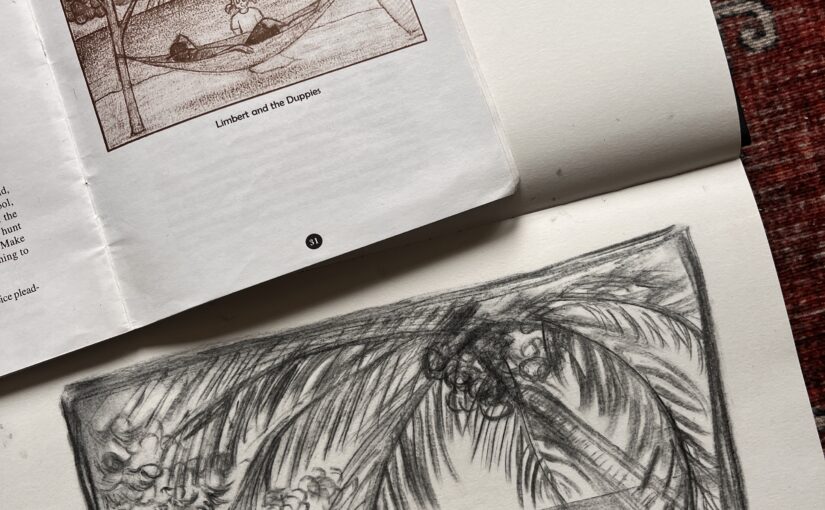
So I turned to a familiar book, my Story Telling Rundown I picked up from a supermarket when visiting my island home one summer. It’s a book written by Nasaria Suckoo-Chollette, recounting Caribbean short-stories. One of these, tells the story of young Limbert and the Duppies, riddled with humour and warnings for young children thinking of sneaking out in the night.

I read the story again, and redrew the story’s illustration with charcoal from a campfire we built recently – a traditional place to share stories and meet duppies.

Redrawing of illustration by Randy Chollette, with charcoal from a wood fire created by Shaquira Lue.


Crystalle Bobbe

Video documentation: https://www.youtube.com/watch?v=erFcQhduqXg

We know more about wars than any generation before us.

We see them live. We analyse maps, statistics, territories and political decisions. Yet much remains opaque.

Wars do not only destroy cities and landscapes. They poison environments, alter ecosystems and leave traces in humans, animals and plants alike.

Their deepest consequences often remain unseen. They are carried in bodies, memories, gestures, silences and inherited fears.

Wars officially end, but their movements continue. They travel through generations, shaping lives long after the last shot has been fired.

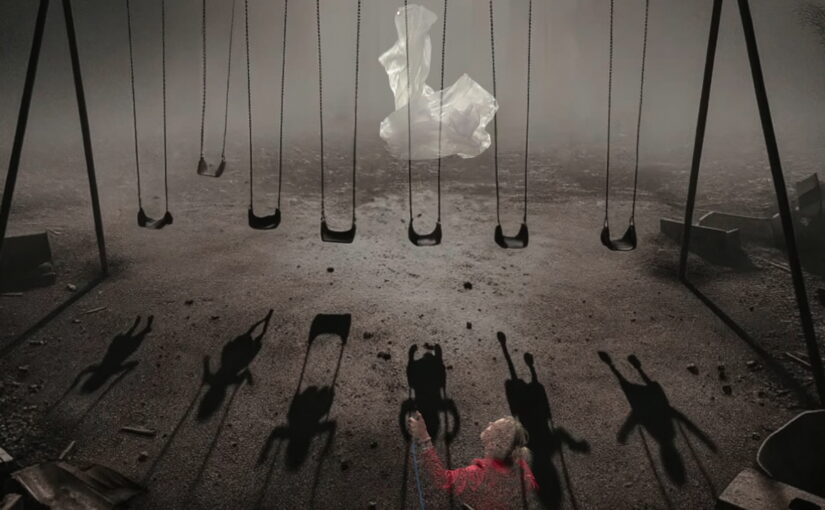
In my work MANDELA – Pilot of the Winds, I ask what happens to those who survive. Can wounded souls ever fly again?

MANDELA – Pilot of the Winds (2024/2025)
Performance by Crystalle Bobbe
All images © Wolfgang Wigands.

Linka Nowell [Caroline L.A. Wheeler]

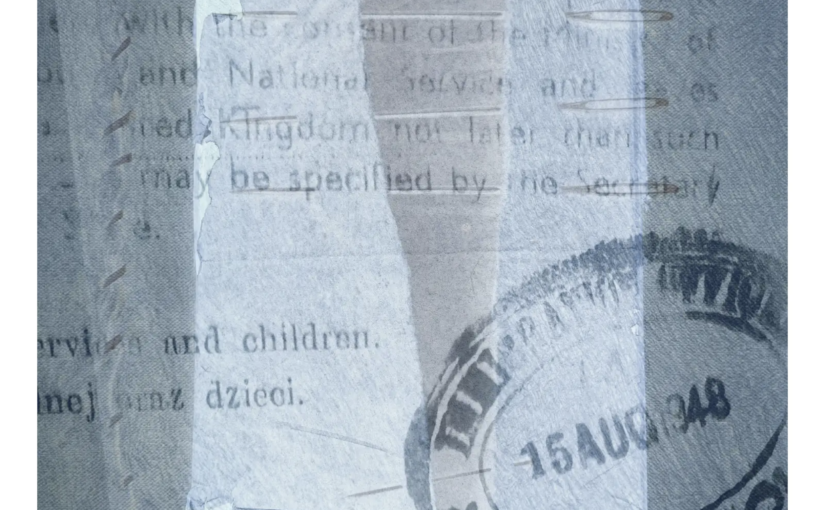
“Permitted to land on condition that the holder registers at once with the Police, does not take or change employment except with the consent of the Ministry of Labour and National Service and leaves the United Kingdom not later than such date as may be specified by the Secretary of State.”

Form 223 X. My Babcia’s.

A dressmaker’s exercise book, lessons in refuge, Nyebyeya. My Babcia’s. 

A piece of hand beaten heritage Bugandan barkcloth, fibrose and rhyzomatic in structure . 

A four steel sewing needles, four steel pins, placed. Two families of four, counted in lines sewed together in life and then death, embodied in a land far from a motherland.

The related layers of my provocation and study are what generate opaqueness. Separately, they can be identified, clarified, positioned, and framed. They can present as old papers, rough cloth, shiny metal. As artefact’s, examples, primary source material and stories for telling. But in the context of studying hidden and micro histories, the hidden micro is simply opaque to the majority and not just the absence of awareness but absence also of the many layers are attached to it. Transparency only comes from knowing it exists, all exists.  By peeling and collaborating with each layer, perspective, positionality and inherent knowledge still leave its own opacity. I gain transparency in the knowing that it will never be fully understood. The experiences of one are never directly the same as that for another. 

Oliver Bennett

If life is a simple classification problem, what does artificial intelligence mean for metabolic, reproductive, and cognitive boundaries already buckling under the weight of lipid bubbles, plasmids, viroids, prions, transposons, organelles, and lichen?

If life is something more, if there is an irreducible quality of experience that evades all representation and transduction, what is there to study?

Z / Anonymous

There are people who still believe study happens in rooms.

This is no longer convincing.

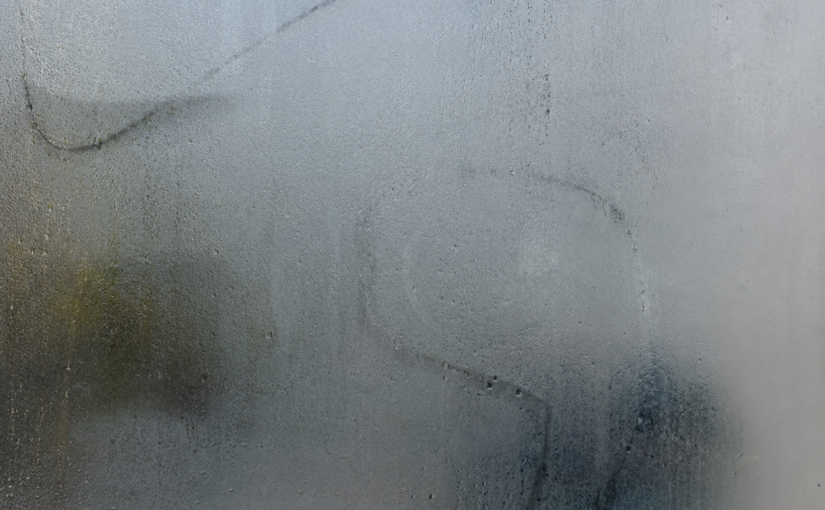
Study occurs in the condensation gathering on supermarket freezer doors.
In buffering icons.
In the silence after someone says “Does that make sense?”
In dogs waiting outside universities.

Entire disciplines are currently being held together by exhausted adjacencies:
tabs left open too long,
half-annotated PDFs,
mutual disappointments,
charged glances across institutional corridors.

Nobody admits this.

Instead we continue to describe study using architectural metaphors:
fields,
foundations,
frameworks.

As though knowledge were a stable structure rather than a fungal bloom spreading beneath damaged terrain.

But observe carefully.

The most intense sites of study rarely resemble expertise.
More often they resemble contamination.

One person develops an obsession.
Another catches it accidentally.
Language starts misbehaving.
Sleep schedules collapse.
Someone begins speaking exclusively through quotations.
A group chat mutates into cosmology.

This is usually where the important thinking begins.

Not in conclusions,
but in atmospheric distortions.

Perhaps study is simply what occurs when thought loses confidence in its own boundaries.

Or perhaps study is what remains after usefulness has departed.

A residue.
A humming.
A sociality organized around shared exposure to things nobody can fully metabolize.

Under these conditions, citation becomes less an academic practice than a form of possession.

We do not read texts.

Texts read each other through us.

Melanie Cox

Ghosts of a Counterpublics Past

‘So many confusions and blurred recollections in people’s memories, my own amongst them… we should, perhaps, be more sceptical of any reconstruction of distant histories’ (Stoneman, 2008).

To study the afterlife of Channel 4’s Independent Film and Video Department (1982-1995) is to confront this exact instability, searching in the shadows of an architecture where autonomy was only ever a phantom of liberty.

There is performative choice in what gets recorded and what fades, a tension suspended between the act of remembrance and systemic erasure from collective memory.

This dynamic ultimately decides who gets to speak, who is heard, and whose muted voices are lost over time. Tracking these fragments requires following the subterranean migration of magnetic tape, yet the ghosts in the counterpublic spheres remain opaque. The history is elusive because the ephemeral social friction of the moment resists easy capture – perhaps haunting our media future.