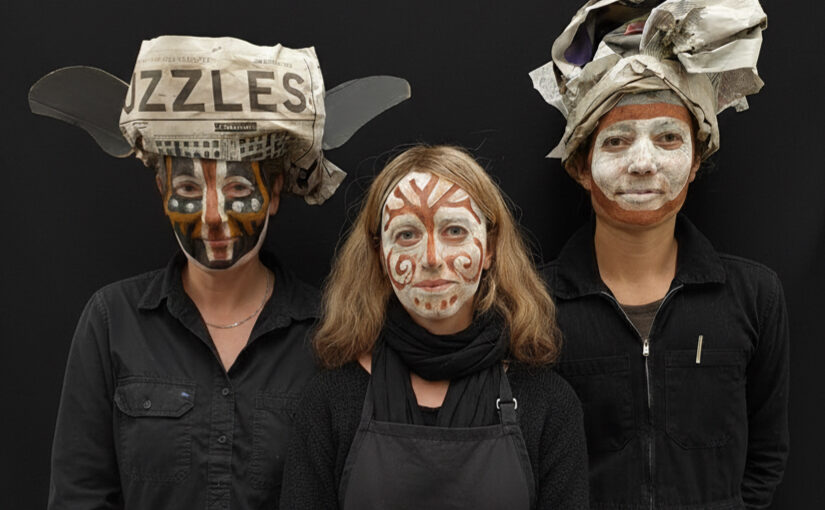
Dialogue around foraged ochre (rocks, clays and soils) as painting medium and more-than-human representative (Ward, 2023) raises tensions between respect for, collaboration with and extraction of such ‘entities’, between anthropocentric assumptions of ‘rights’ (Latour, 2017), of ‘intra-action’ (Barad, 2007), about ‘proof’ of agency, language, listening and voice, between science and belief, appropriation and common-sense. Some offer that particular ochres will ‘ask’ to participate in specific situations (Ross, 2024), while others that permission must be gained, whether culturally or legally, without conclusive ‘evidence’ for either. An inability to ever really know provides a ‘resonance’ (Rosa, 2020) of creative intrigue, a dichotomy of discourse and an expansive pervasiveness into many other areas of study, from art and design to energy and ecology. No matter how embodied human contact with more-than-human others, there is no guarantee of ethical communication; empathy not arising intrinsically or through logical comprehension but as predetermined belief. Discuss…


